PROJECT ARC’S TABERNACLE
What if the Wilderness Tabernacle was never meant to be understood as a rectangular tent?
Project Arc explores whether the Tabernacle described in Exodus may have originally followed a nonlinear, circumferential, and dome-based pattern hidden in plain sight within the biblical text itself.
Context is King.
One of the greatest sources of confusion may come from the inherited “50 by 100” rectangular assumption often associated with the outer court. Over time, many readers may have unconsciously projected this courtyard shape directly onto the Tabernacle itself, even though Exodus 26 focuses heavily on woven curtain mechanics, joining sequences, and architectural pattern details that may point in another direction entirely.
Exodus 26 describes woven curtains joined together by loops of blue “from the end” — details that may suggest an entirely different architectural framework than the inherited shoebox model commonly imagined today.
Project Arc examines whether biblical measurements commonly translated as “length” and “width,” within certain architectural contexts, could function more like diameter and radius rather than strictly rectangular assumptions.
From the curtain mechanics and joining sequence to circumference, centralized design, and nature’s geometry, Project Arc invites a renewed examination of the Tabernacle through Scripture, context, and structural design itself.
What if the pattern was never shapedbox?


Hello, the Wilderness Tabernacle structure is envisioned here as a six-story-high, yurt-like tent.
-
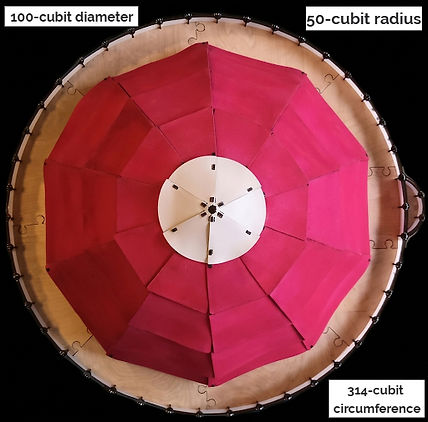
Flavius Josephus is questioned because his “50 cubits wide and 100 cubits long” description treats the Tabernacle courtyard as a rectangle, while Exodus 26:7–13 can be read as a sequential pattern forming a circular layout: a 314‑cubit (π‑based) circumference, a 50‑cubit radius, and a 100‑cubit diameter. In that reading, “length” and “width” function as diameter and radius, not rectangular dimensions.
-
Beginning with the first “pattern” instructions in Exodus 26:1–6, the curtains are described as joining from one end (מִקָּצָה) to the outermost edge (הַקִּיצוֹנָה), connected by four-cubit ends with loops of blue.
Moses' building instructions start in Exodus 26:1-6, which Exodus 26 & 27 must accommodate.
Tabernacle blueprints & model by mechanical engineer
Andrew L. Hoy - Project314.org

This is one of the ten curtains described in Exodus 26:1–6. Each curtain measured 28 cubits long and 4 cubits wide, forming long, narrow loom-woven linen panels joined together as one unified structure.
The “loops of blue” were positioned along the upper portion of the 4-cubit ends — the shorter cut sides of the curtain, not the 28-cubit selvedge edges. In Project Arc’s reconstruction framework, these curtains may have stood upright to help form the tent wall itself.

Exodus 26:1-6
1 `And thou dost make the tabernacle: ten curtains of twined linen, and blue, and purple, and scarlet; [with] cherubs, work of a designer, thou dost make them;
-
10 blue, purple & red linen curtains with cherubim sewn on that make the Tabernacle
2 the length of the one curtain [is] eight and twenty by the cubit, and the breadth of the one curtain four by the cubit, one measure [is] to all the curtains;
-
10 curtains are 28 by 4 cubits
3 five of the curtains are joining one unto another, and five curtains are joining one to another.
-
10 curtains are divided into two sets of 5 curtains to be coupled
4 `And thou hast made LOOPS OF BLUE upon the EDGE of the one curtain, at the END in the joining; and so thou makest in the EDGE of the OUTERMOST curtain, in the joining of the second.
-
The curtains are joined together as one by their 4-cubit EDGE, END, OUTERMOST using the BLUE LOOPS, NOT red loops.
-
4-cubit EDGE-END מִקָּצָ֖ה
-
4-cubit EDGE-OUTERMOST הַקִּ֣יצוֹנָ֔ה
-
NOT the 28-cubit edges
-
4-cubit end-to-end curtains look like these lines ---------------------------
-
The box Tabernacle curtains join the 28-cubit side-by- side and look like these lines |||||||||||||||||||||||||||||||||||||
-
See the difference?
-
And gives us the curtain color "pattern" Ex. 25:40
5 fifty loops thou dost make in the one curtain, and fifty loops thou dost make in the edge of the curtain which [is] in the joining of the second, causing the loops to take hold one unto another;
-
50 loops at each end בִּקְצֵ֣ה of each curtain join together to be one with another curtain's 50 loops
6 and thou hast made fifty hooks of gold and hast joined the curtains one to another by the hooks, and the tabernacle hath been one.
-
50 gold hooks finish the joining the curtains together to become one makes the Tabernacle


.png)
See the differences, see the problems with the traditional shoebox Tabernacle's curtains? They lack color "pattern" instructions.
All ten curtains are to be joined as one by the 4-cubit loops of blue by their cut end, outermost edges...
Not by their 28-cubit uncut edges.


Exodus 26:4 - 4-cubit
שְׂפַ֤ת - edge
מִקָּצָ֖ה - edge END
בִּשְׂפַ֣ת - edge
הַקִּ֣יצוֹנָ֔ה -edge OUTERMOST
Exodus 26:4a
מִקָּצָ֖ה = from end ✅
מִקָּצָ֖ה = selvedge ❌
Selvedge is a textile term for the tightly woven edge of fabric that
prevents unraveling and fraying; it's NOT a synonym for "end." "End" and "selvedge" are different words that mean different things.
Young's Literal Translation ✅✅ END
Ex. 26:4 `And thou hast made loops of blue end-to-end, outermost, warp upon the edge of the one curtain, at the -END- in the joining;
PERFECT PLACEMENT, PERFECT WORD
English Standard Version ✅ ? OUTERMOST
Ex. 26:4 And you shall make loops of blue on the edge of the -OUTERMOST- curtain in the first set.
PERFECT PLACEMENT, NOT THE PERFECT WORD
Ex. 26:4 You shall make loops of blue on the edge of the one curtain from the -EDGE- in the coupling;
TOO AMBIGUOUS, WHAT EDGES?
Douay-Rheims Catholic Bible ❌ ? SIDES
Ex. 26:4 Thou shalt make loops of violet in the -SIDES-
King James Version ❌❌ SELVEDGE
Ex. 26:4 And thou shalt make loops of blue upon the edge of the one curtain from the -SELVEDGE- in the coupling;
WRONG PLACEMENT, WRONG WORD ADDED
miq·qā·ṣāh = END
Exodus 25:19
KJV: one cherub on the one ✅END✅, and the other cherub on the other ✅END✅
YLT: one cherub at the ✅END✅ on this side, and one cherub at the ✅END✅
NASB: one cherub at the ✅END✅ on this side, and one cherub at the ✅END✅
Exodus 26:4
YLT: at the ✅END✅ in the joining
NASB: [f]outermost curtain in the first set, and likewise ✅from the end✅
KJV: curtain from the ❌SELVEDGE❌ in the coupling
Exodus 36:11
KJV: curtain from the ❌SELVEDGE❌ in the coupling
NASB: of the [ac]outermost curtain in the first one curtain ✅from the end✅
Exodus 37:8
KJV: One cherub on the ✅END✅ on this side, and another cherub on the other ✅END✅
YLT: one cherub at the ✅END✅ on this [side], and one cherub at the ✅END✅
NASB: one cherub at the one ✅END✅ and one cherub at the other ✅END✅
Why is the textile word "SELVEDGE" used here? In Hebrew it actually means "END." Why take away and add a different word to the Bible that's a textile term?


Quiz: Exodus 26:1–6 and the Tabernacle Curtains
1. Were the Exodus 26:1–6 curtains connected with gold or silver hooks?
A. Gold
B. Silver
2. What is the best translation for מִקָּצָה?
A. From side
B. From edge
C. From end
D. From selvedge
3. What term refers to the set of long, parallel threads that run lengthwise on a loom, forming the foundation and structure stretched taut between the loom beams?
A. Warp
B. Selvedge
4. The Exodus 26:1–6 curtains are first divided into two sets of five and then joined back together as one unit.
A. True
B. False
5. How many of the ten-curtain blue-loop ends in Exodus 26:1–6 join together with the loops of the other set?
A. Zero
B. Nine
C. Ten
D. Eight
6. What structural design is generally best for a camping tent?
A. A box tent
B. A dome tent
7. Which statement is accurate according to Exodus 26:1–6?
A. The individual curtains measure 4 cubits by 30 cubits.
B. The individual curtains measure 4 cubits by 28 cubits.
8. The Exodus 26:1–6 curtains are described as blue, purple, and green.
A. True
B. False
9. Each curtain in Exodus 26:1–6 has four edges: two uncut 28-cubit edges (selvedges) and two 4-cubit cut ends (warp ends).
A. True
B. False
10. Which passage starts the sequential “pattern” referenced in Exodus 25:9, 40?
A. Exodus 26:1–6
B. Exodus 27:18
1.A 2.C 3.A 4.A 5.C 6.A 7.A 8.B 9.A 10.B

On Mt. Sinai in 1440 BC, Moses was given the first approximation of Pi within .05% in history.
Exodus 26:7-13
A) Pi from Exodus 26:7-13
330 cubits long = Ex. 26:8 Eleven curtains each 30 cubits long by 4 cubits
315 cubits long = Ex. 26:9 One curtain is folded in half to 15 cubits long
314 cubits long = Ex. 26:13 Curtain hang over taken in 1 cubit long
330 - 15 - 1 = 314-cubit circumference circle
&
B) Pi from Exodus 27:18
3.14 = 314 circumference/50-cubit radius, "50 in 50," c = 2 π r
&
C) Pi from Exodus 38:13
c = 2 π r
Pi is woven together in the spiral of the double helix in your DNA. The relationship between Pi (approx. 3.14159), Phi (approx. 1.618), and a dome lies in the intersection of ancient architecture and structural efficiency. While Pi deals with curvature and circles, and Phi with proportion and growth, they combine to form stable, aesthetically pleasing dome structures. 2,000 years ago, everyone accepted Josephus Flavius' wrong Tabernacle description into our religious dogma. They all come from the same bad data; Josephus the historian's history is not holy canon, friend.
Sometimes, width is just width; in others, it is radius; and in one instance, it is diameter... it depends on the CONTEXT.
Exodus 26:10 "Outermost"
שְׂפַ֤ת - edge
הַקִּיצֹנָ֖ה - OUTERMOST
שְׂפַ֣ת - edge




.png)

est 13,000 sq ft inside tent, 60 ft high
est 750 sq ft inside tent, 15 ft high

Exodus 26:14 — The Covering Above the Tent
“And thou shalt make a covering for the tent of rams’ skins dyed red, and a covering above of ❌badgers’❌ skins.”
Project Arc strongly questions the inherited “badger skins” translation in Exodus 26:14. The Hebrew word תְּחָשִׁים (tachashim) does not contextually require “badgers,” yet Martin Luther helped popularize this interpretation through an apparent connection to the German word Dachs, meaning badger.
But badgers are unclean animals.
That matters.
The Holy of Holies represented the most set-apart space within the entire sanctuary system. Scripture consistently emphasizes holiness, purity, and consecration throughout the Tabernacle. Every material carried meaning.
An unclean animal would never logically cover the Holy of Holies.
The idea creates a serious contextual contradiction.
This becomes even more striking in light of 168 BC, when Greek forces desecrated the Temple by sacrificing a pig — another unclean animal — upon the altar.
Project Arc therefore treats “badger skins” as possible translation drift rather than settled interpretation.
The larger architectural question then emerges:
If the Tabernacle was nonlinear or dome-like, how should the surface area of the covering actually be measured?
A dome is not measured like a shoebox roof.
Context is King.

The blueprints from Exodus 26:15-37 continue the construction instructions for the Wilderness Tabernacle.
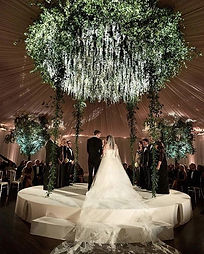
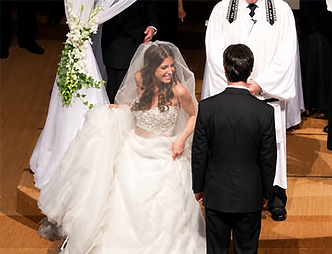

It's a Jewish wedding tradition for the bride to circle the groom, a ritual known as hakafot, הַקָּפוֹת which symbolizes several things including creating a new home, building a protective "wall" around the groom, and the start of a new life together. The bride typically circles the groom seven times, a number with deep significance in Judaism that represents completion and perfection.
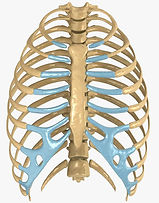
Exodus 26 Side Rib
צֵלָע, tsêlâa rib (as curved), literally (of the body)
Adam's rib and the construction of the tabernacle, the word "tsela" is used to describe the sides/rib of the structure. Daniel 7:5, the second beast is described as having "three rib in its mouth between its teeth" among other examples.
Corners Bending
Ex. 26:23-24 מְקֻצְעָה Word Origin: [from H7106 (קָצַע - To end) From qatsa' in the denominative sense of bending
18 side/rib
20 side/rib, side/rib
22 sides/rib
26 side/rib
27 side/rib, sides/rib
35 side/rib, side/rib
23 corners
24 two corners, head unto the one ring
Side To Edge
"to edge south (and) towards the right"


Exodus 27:1-8?


_edited_edited.jpg)

"Width quartered"
A First Temple mindset may have understood foursquare as four equal parts, quartered, or width quartered rather than necessarily a modern square with four right-angle corners.
A 1st Temple mindset understands "foursquare" as 4 equal parts, width quartered or quartered.
"Width quartered"
Exodus 27:1-8 Hebrew description does not convey such redundancy, it does refer to the altar as רחב רבוע or "width quar-tered" (H7341, H7251). A cylindrical or semi-spherical altar would allow for best airflow and heating (unlike a square altar with right angle corners) quartered instead of square.
Project Arc proposes that the phrase translated "foursquare" deserves renewed examination within its original Hebrew context. In Exodus 27:1-8, the Altar of Sacrifice is described using language often rendered as "square," yet the underlying expression can also be understood as "width quartered" or divided into four equal parts. A round altar divided into four sections would still be quartered while offering practical advantages for airflow, heating, and transport.
If "foursquare" in Exodus describes four equal parts rather than a specific geometric shape, should we automatically assume a square or cube whenever the term appears elsewhere?
This concept appears throughout Project Arc's study of biblical architecture. A circle divided into four equal parts is still quartered. A center-based design aligned to the four cardinal directions is likewise quartered.
Applied to Revelation 21:16, Project Arc asks whether "the city lieth foursquare" may describe a city organized into four equal quarters extending from a central point. In this view, the cardinal directions define the city's four quarters, while the twelve gates remain distributed around its perimeter.
The measurements remain the same.
The geometry is reconsidered.
Foursquare = Width Quartered
Context determines shape, not the number.
Exodus 27:1–8 describes the altar using the Hebrew phrase רָבוּעַ (rabuwaʿ), commonly translated "foursquare." Yet the Hebrew concept may point more broadly to something divided into four equal portions or quartered. A cylindrical or semi-spherical altar would naturally satisfy a "width quartered" description while also providing superior airflow, more even heat distribution, and fewer dead corners than a traditional square altar. In practical terms, rounded geometry allows fire to circulate more efficiently, concentrating heat toward the center rather than dissipating it into four right-angle corners.
Project Arc therefore explores whether the altar's description is better understood through its function, proportions, and Hebrew context rather than through later assumptions about rectangular architecture. If so, the phrase may describe a quartered design principle rather than a strictly square shape, consistent with other nonlinear architectural patterns proposed throughout the biblical blueprint tradition.
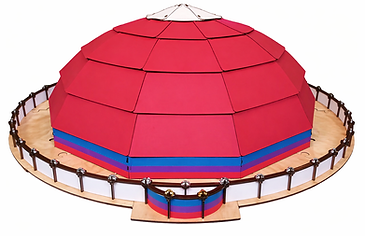
Beyond the architectural questions, practical considerations must also be addressed. Thousands of sacrifices would create challenges involving blood, carcasses, odors, insects, sanitation, and crowd movement. Project Arc also notes that Exodus 27:1-8 describes a hollow Brazen Altar constructed of acacia wood and bronze, with dimensions that may allow for alternative geometric interpretations.
A traditional square altar located inside the courtyard:
-
Blood would accumulate where people walked.
-
Animal remains, hides, fat, bones, and offal would require constant removal.
-
Insects & rodents would swarm to the water, blood and carcasses.
-
The smell of blood, burning flesh, and decaying remains could become overwhelming.
-
Poor sanitation has historically been associated with contamination, disease, and insect infestations.
-
Long lines and heavy traffic would reduce sacrificial efficacy.
Project Arc's proposed round altar outside the courtyard:
-
Blood, carcasses, and waste remain outside the primary worship area.
-
Improved sanitation and reduced insect activity.
-
Better separation between sacrifice and worship.
-
Exodus 27:1-8 may permit a circumferential interpretation when examined within the broader context of Exodus 26-27.
-
360-degree access increases throughput and efficacy.
-
Shorter walking distances and improved crowd flow.
-
Circular fire patterns may improve heat distribution and combustion.
-
Preserves cleanliness, order, and reverence within the sacred space.
From both a practical and engineering perspective, the outside round Brazen Altar could better accommodate large numbers of worshippers while reducing congestion, improving efficacy, and keeping the blood, odors, insects, and carcass disposal associated with continual sacrifice away from the primary worship area.
Exodus 27:9-21
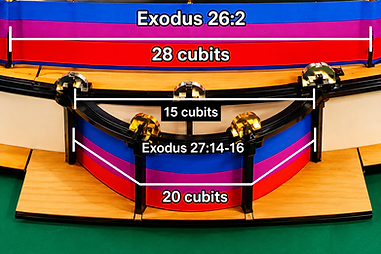
9 `And thou hast made the court of the tabernacle: for the south side/to edge southward, hangings
for the court of twined linen, a hundred by the cubit [is] the length for the one side/edge,
10 and its twenty pillars and their twenty sockets [are] of brass, the pegs of the pillars and
their fillets [are] of silver;
11 and so for the north side/edge in length, hangings of a hundred [cubits] in length, and its
twenty pillars and their twenty sockets [are] of brass, the pegs of the pillars and their fillets
[are] of silver.
12 `And [for] the breadth of the court at the west side/edge [are] hangings of fifty cubits, their
pillars ten, and their sockets ten.
13 And [for] the breadth of the court at the east side/to edge, eastward, [are] fifty cubits.
14 And the hangings at the side/shoulder [are] fifteen cubits, their pillars three, and their sockets three.
15 And at the second side/shoulder [are] hangings fifteen [cubits], their pillars three, and their sockets three.
16 `And for the gate of the court a covering of twenty cubits, blue, and purple, and scarlet, and
twined linen, work of an embroiderer; their pillars four, their sockets four.
"to edge south (and) towards the right"
לִמְקֻצְעֹ֖ת
Yes, תֵּמָן (Tēman) biiblical Hebrew means "South" or "to the right," derived from the root meaning "right hand," because facing east (the rising sun).
Exodus 27:17-19
17 All the pillars of the court round about [are] filleted [with] silver, their pegs [are] silver, and their sockets brass.
18 `The length of the court [is] a hundred by the cubit, the breadth is 50 by 50 (KJV "50 everywhere"), and the height 5 cubits.", of twined linen, and their sockets [are] brass,
19 even all the vessels of the tabernacle, in all its service, and all its pins, and all the pins of the court, [are] brass.
Exodus 27:18
"width 50 in/by 50" or "width 50 tenting 50," 50 wide from the center is radius ורחב חמשים בחמשים "And fifty by fifty wide"
50-cubit radius... expand
H7341 "expanse," root: H7337 רָחַב which means to be or grow wide, (50 by 50 ) expanse
H7572 בַּחֲמִשִּׁים "by/in/with fifty," plural form "by fifties," 50 by 50-cubit radius
NASB
Ex. 27:18 "...width 50 throughout..."
KJV, ASV
Ex. 27:18 "...breadth 50 everywhere..."
The Tabernacle's 314-cubit circumference (Ex.26:7-13) of Pi π has a 50-cubit radius and a 100-cubit diameter. See the mistake?
It's NOT a 100 cubits long & 50 cubits wide rectangle.
Exodus 27:20–21
Statues were presented for Israel's future generations, and olive oil was provided to keep the candles burning overnight.
Weight limits?
The dome-shaped Tabernacle could also be dismantled rapidly, potentially within four hours by approximately 2,500–3,500 trained Levites. Despite its much larger covered area, the dome-based structure may have weighed only about one-third as much as the traditional box-shaped Tabernacle, especially when considering the silver weight limitations described in Exodus 38:27.


est. 100 lbs. of silver
“And the LORD went before them by day in a pillar of a cloud... and by night in a pillar of fire.” — Exodus 13:21
During the day, the cool “cloud by day” above the Tabernacle could create condensation as warm desert air contacted the cooler leather coverings. At night, the “fire by night” would produce the opposite effect: heat from the fire meeting the rapidly cooling desert air could again generate moisture through temperature contrast. Both daytime cooling and nighttime heating create ideal conditions for condensation formation.
A dome-shaped structure naturally helps collect and channel this moisture downward, while also shedding rain, resisting wind, and improving airflow. Curved surfaces promote runoff and reduce trapped moisture. In contrast, a flat-roof rectangular tent traps heat, stagnant air, and condensation, increasing the likelihood of mildew and decay, conditions associated with uncleanness in Leviticus 14.
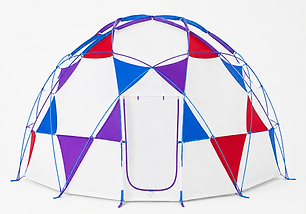
Modern science and even modern camping tents demonstrate the same principle: domes manage condensation, wind, and structural stress far better than flat-roof designs. Nature consistently favors curvature because curved forms distribute pressure and moisture more efficiently.


Josephus’ Historic Mistakes
In Antiquities of the Jews, Volume 1, Book 3, Chapter 6, Josephus Flavius begins his reconstruction with Exodus 26:30, largely bypassing Exodus 26:1–29, where the actual curtain pattern, loops of blue, and structural sequence are first established. He then moves to Exodus 27:18 while also overlooking Exodus 26:31 through Exodus 27:17, causing the Tabernacle’s arrangement to be described out of sequence and disconnected from its earlier architectural context.
Josephus appears to conflate features of Herod’s Temple and later rectangular temple traditions with the original Wilderness Tabernacle, describing the structure as a “quadrangular figure.” However, this inherited rectangular interpretation conflicts with the circumferential framework established in Exodus 26:7–13. Within Project Arc’s contextual reading, the 50-cubit measurement functions “from the center,” forming a 50-cubit radius and a 100-cubit diameter, producing an approximate 314-cubit circumference.
Exodus 27:18 states that “the breadth [was] fifty everywhere” (KJV), while Exodus 38:9–13 reinforces the repeated 50-cubit pattern surrounding the courtyard. Rather than describing a simple rectangle, these measurements may preserve a radial, width-quartered, circumferential layout that later interpreters misunderstood through post-exilic and Greco-Roman architectural assumptions.
By rearranging the construction sequence and interpreting the measurements through a later rectangular lens, Josephus may have unintentionally contributed to centuries of confusion surrounding the original Tabernacle pattern.


Taking a word or phrase out of context is called “contextomy,” or biblically, “eisegesis.” Eisegesis occurs when interpreters read their own assumptions, traditions, or biases into a text rather than allowing the original context and sequence to define its meaning.
In Antiquities of the Jews (94 AD), Josephus Flavius wrote:
“Moses... he had measured the open court, 50 cubits wide and 100 long.” ❌
This statement reflects a later rectangular interpretation imposed upon the Wilderness Tabernacle narrative. However, Exodus 26:1–13 establishes the architectural pattern first, before Exodus 27:18 ever describes the surrounding court. By bypassing the earlier contextual framework and reading the measurements through a Greco-Roman rectangular lens, Josephus may have unintentionally introduced centuries of architectural misunderstanding.
Within Project Arc’s contextual reconstruction, the repeated 50-cubit measurements function radially “from the center,” forming a circumferential pattern rather than a simple 50 × 100 rectangle. Context determines meaning, and when the sequence is ignored, the pattern itself becomes distorted.
What are religious leaders saying?
Both Tabernacle models were misrepresented by Grok A.I. How would
hermeneutics professors feel about applying artificial intelligence
in this way? Notably, the “loops of blue” described in Exodus 26:4–6
were never meaningfully addressed. Why? Because Grok largely
repeated inherited online religious traditions instead of carefully
following the Hebrew text, construction sequence, textile
mechanics, and surrounding CONTEXT.
The result was not true contextual analysis, but a repetition
of later assumptions layered onto the biblical narrative.
“I asked Grok for an analysis, and I think it does an even better job.”
— Doug Overmyer
"What?!"
— Hayden Hendrix
Here is an example of context, would you rather go camping in a flat roofed tent or a dome tent?

Chronological Timeline
-
1440 BC — Moses receives the “pattern” of the Wilderness Tabernacle on Mount Sinai
-
1406 BC — Moses dies; the Hebrews enter the Promised Land
-
1010 BC — Reign of King Saul begins in Israel
-
957 BC — Solomon’s Temple is completed
-
931 BC — Israel divides into two kingdoms
-
720 BC — Northern Kingdom destroyed
-
586 BC — Southern Kingdom destroyed; First Temple falls
-
420 BC — Intertestamental period begins
-
3 BC — Christ is born
-
30 AD — Christ is crucified and resurrected
-
30 AD — Pentecost
-
70 AD / 3830 AM — Second Temple destroyed
-
325 AD — Constantine convenes the Council of Nicaea
-
1517 AD — The Reformation begins
-
1947 AD — Dead Sea Scrolls discovered
-
2014 AD — Wilderness Tabernacle blueprint framework identified within the Exodus text by Project314.org

For a proper, detailed deep dive into the geometry, context, Hebrew, textile mechanics, engineering principles, and how the Wilderness Tabernacle may actually have been constructed, consult (2015) The House of El Shaddai by Andrew L. Hoy, a mechanical engineer and serious student of biblical Hebrew.
The book explores Exodus in far greater technical detail, including the curtain sequencing, loops of blue, structural load distribution, tension and compression mechanics, circumference-based geometry, transport logistics, contextual architectural design, and much more. It also examines how later assumptions and inherited traditions may have obscured the original pattern described in the biblical text.
Amazon Books
Project 314 The House of El Shaddai: God's Dwelling Place Reconsidered
Ancient Hebrew Research Center
The Tabernacle: An Ancient Journey with the Ancient Hebrew Language | AHRC
The Christian Times
Tabernacle in Bible was circular not rectangular, says Bible-loving engineer

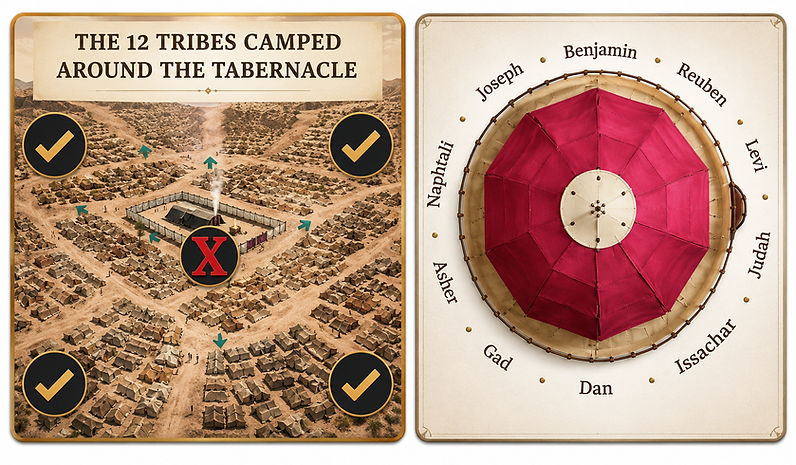

I believe the Second Temple stands alone as the Bible's only linear, shoebox-shaped structure. The other biblical structures and the seven furnishings exhibit nonlinear, arced architecture.